
2026 Job Outlook: Dental, Medical, and Veterinary Careers in Milwaukee
Choosing a career is a big decision, and it helps to look at the facts before you commit. One of the best ways to check a career’s future is to look at its “job outlook.” Job outlook is the government’s estimate of how much a career field will grow over the next several years. The U.S. Bureau of Labor Statistics (BLS) tracks this data for hundreds of jobs across the country, including healthcare and animal care roles.
This guide covers the latest job outlook numbers for four in-demand careers: dental assistant, medical assistant, veterinary assistant, and veterinary technician. It also explains why these hands-on jobs are hard for AI to take over, even as automation changes other parts of the workforce.
A quick note on the numbers: the BLS releases new wage and growth data on a set yearly schedule, and there is always a lag between when the data is collected and when it is published. The figures below are the most recent official numbers available as of this writing (2024 wage data and 2024-2034 growth projections). They are current, not brand new, and that is normal for government labor data. This page will be updated as newer BLS figures become available.
Why These Jobs Are Hard for AI to Replace
AI tools are changing a lot of workplaces. Chatbots can answer customer questions, and software can process paperwork faster than a person can. But dental assistants, medical assistants, veterinary assistants, and veterinary technicians all work with their hands on real patients, real animals, and real people.
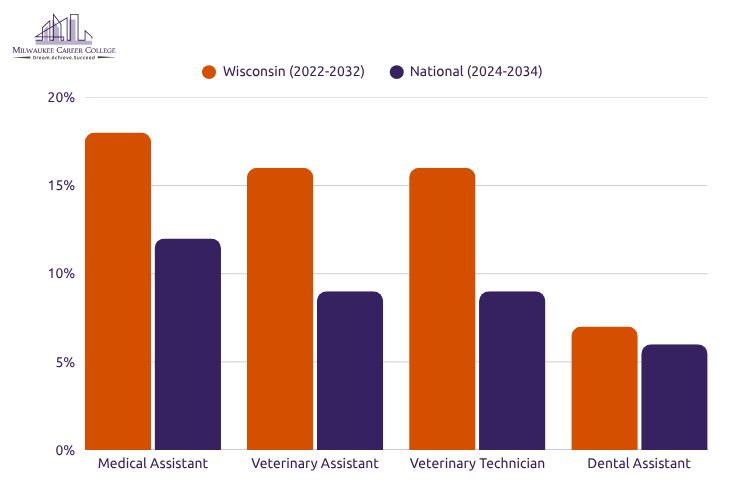
A computer program cannot hold a nervous patient’s arm steady for a blood draw. It cannot calm a scared dog before a nail trim, or comfort someone who just got bad news at the doctor’s office. These jobs depend on human touch, human judgment in the moment, and a level of trust that only a person can build with a patient or client. That is why career fields like these are often called “AI-resistant.” As long as people and animals need physical care, someone needs to be in the room to provide it.
Dental Assistant Job Outlook
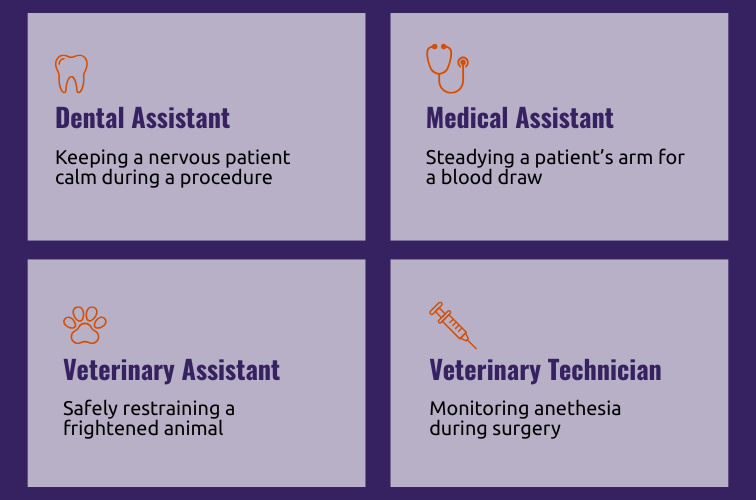
The dental assistant field is expected to grow 6 percent from 2024 to 2034, which is faster than the average for all jobs. The BLS projects about 52,900 dental assistant openings every year over that decade. In May 2024, the median annual pay for dental assistants nationwide was $47,300. In the Milwaukee-Waukesha area, dental assistants earn a median annual wage of $47,140, essentially matching the national number. Wisconsin’s own growth projection for dental assistants is even stronger, at 7 percent, with about 1,000 openings expected each year statewide.
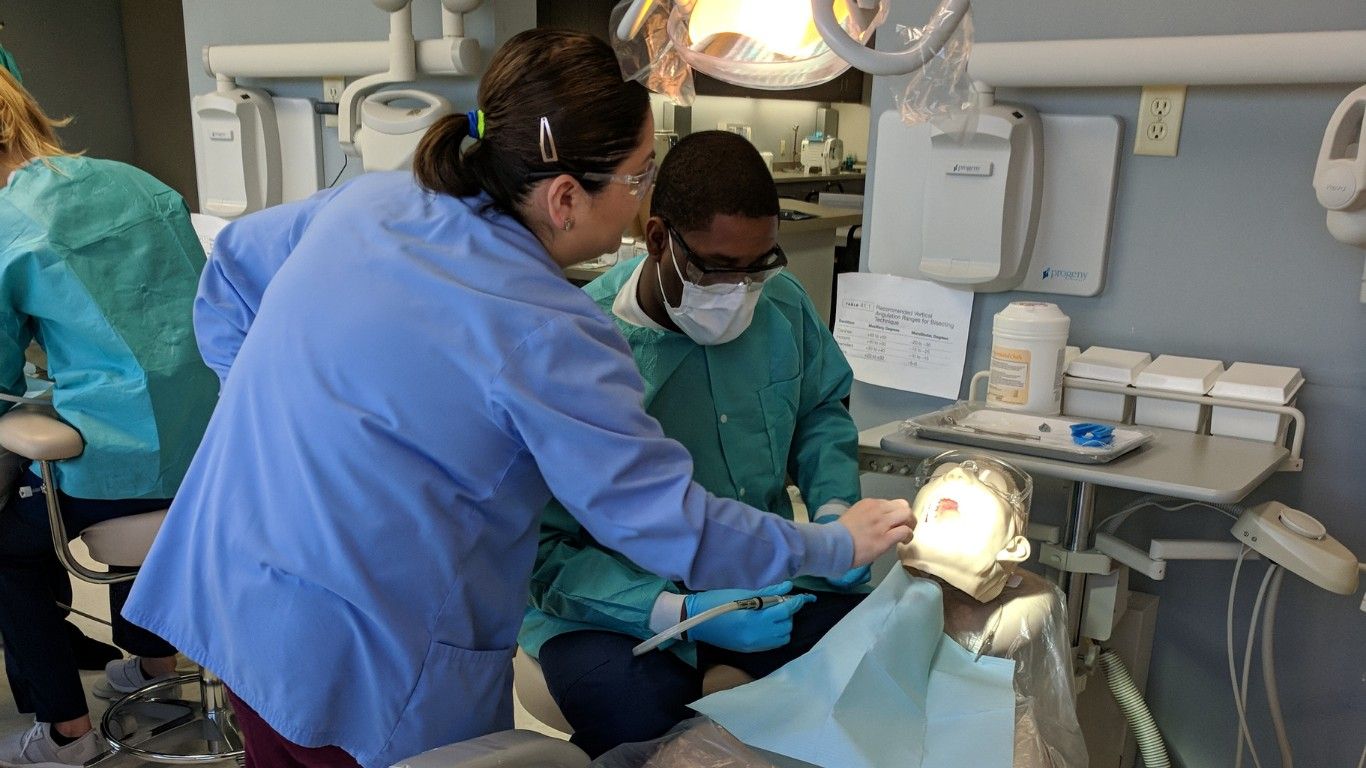
Dental assistants work chairside with dentists during exams and procedures. They take x-rays, sterilize instruments, keep patient records, and schedule appointments. Much of the job involves putting a nervous patient at ease while working carefully and precisely inside someone’s mouth, a combination of trust and physical skill that AI cannot provide.
Milwaukee Career College offers a Dental Assistant program built around this kind of hands-on training.
Medical Assistant Job Outlook
The medical assistant field is projected to grow 12 percent from 2024 to 2034, which the BLS classifies as much faster than average. About 112,300 openings are expected each year over the decade. The median annual wage for medical assistants nationwide was $44,200 in May 2024. Medical assistants in the Milwaukee-Waukesha area earn a median annual wage of $49,590, about 12 percent above the national number. Wisconsin’s own growth projection for medical assistants is even stronger, at 18 percent, with about 2,040 openings expected each year statewide.
Medical assistants handle both administrative and clinical tasks in doctor’s offices, clinics, and hospitals. They take vital signs, prepare patients for exams, draw blood, and help doctors move efficiently through a busy schedule. Reading a patient’s discomfort, adjusting an approach on the spot, and offering reassurance during a procedure all require a person, not a program.
Learn more about the Medical Assistant program at Milwaukee Career College.

Veterinary Assistant Job Outlook
The veterinary assistant field is expected to grow 9 percent from 2024 to 2034, much faster than average. The BLS projects about 22,200 openings a year over the next decade. The median annual wage for veterinary assistants nationwide was $37,320 in May 2024. In the Milwaukee-Waukesha area, veterinary assistants earn a median annual wage of $37,770, slightly above the national number. Wisconsin’s own growth projection for veterinary assistants is notably stronger, at 16 percent, with about 520 openings expected each year statewide.
Veterinary assistants feed, walk, and monitor animals, and support veterinarians and veterinary technicians during exams and procedures. Reading an animal’s body language and safely restraining a frightened or aggressive pet takes real experience and quick reactions. No AI system can step in to hold a struggling animal still or notice the subtle signs that a pet is in pain.
Milwaukee Career College’s Veterinary Assistant program trains students for this kind of daily animal care work.

Veterinary Technician Job Outlook
The veterinary technician field is projected to grow 9 percent from 2024 to 2034, much faster than average. About 14,300 openings are expected each year over the decade. The median annual wage for veterinary technicians nationwide was $45,980 in May 2024. Veterinary technicians in the Milwaukee-Waukesha area earn a median annual wage of $47,770, about 4 percent above the national number. Wisconsin’s own growth projection for veterinary technicians is notably stronger, at 16 percent, with about 280 openings expected each year statewide.
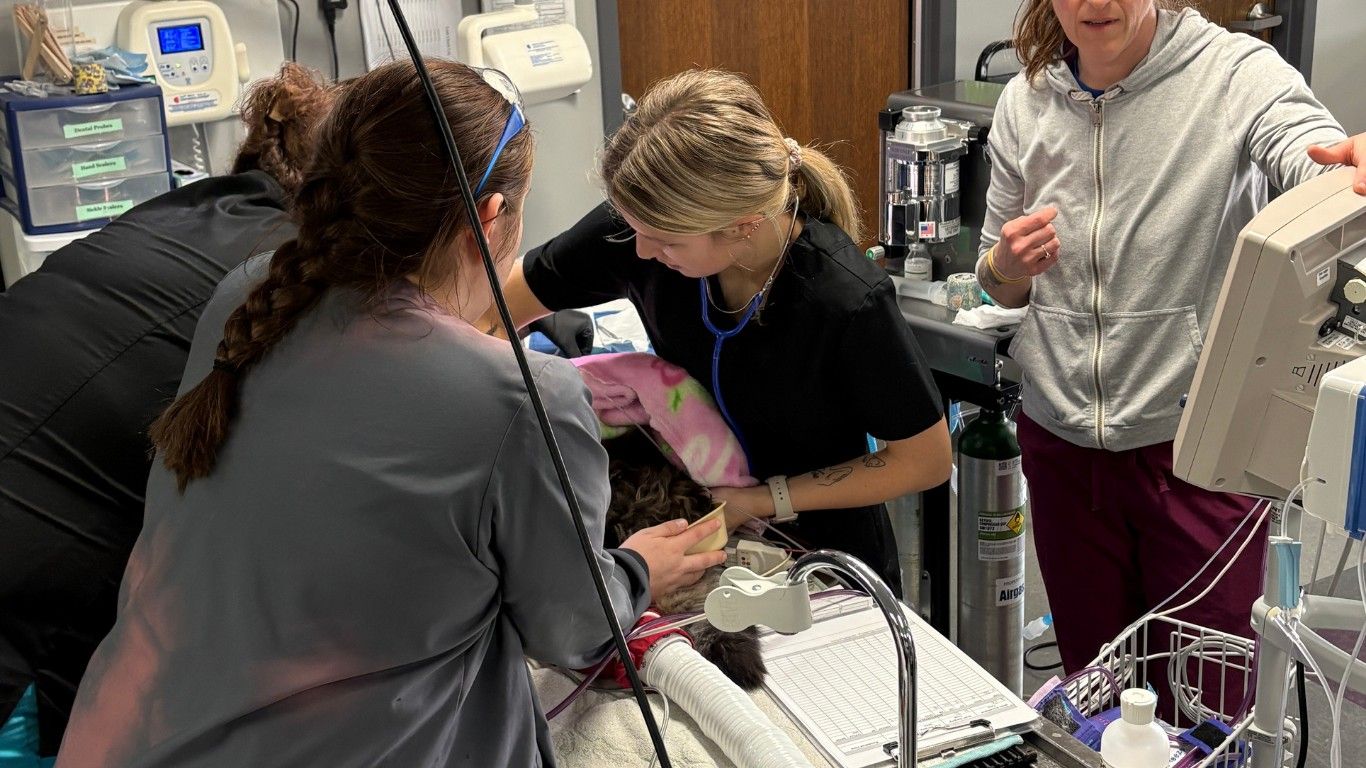
Veterinary technicians run lab tests, take x-rays, administer medication, and assist during surgery. Most states require vet techs to pass a credentialing exam and become registered, licensed, or certified before they can practice. This role blends clinical skill with the same hands-on animal handling that keeps it firmly in human hands.
Explore the Veterinary Technician program to see how training works.
Where Can I Get Training in Milwaukee?
Milwaukee Career College offers accelerated training programs in all four of these fields, and most can be completed in two years or less. Students can choose day or evening classes to fit training around work or family responsibilities.
Getting started involves a few steps: reviewing admissions requirements, looking into tuition assistance and financial aid options, and understanding how the school’s job placement support works once training is complete.
Frequently Asked Questions
What does “job outlook” mean?
Job outlook is the government’s projection of how much a career field will grow or shrink over a set period, usually ten years. The BLS publishes this data based on economic trends, population changes, and industry demand.
Which of these four careers has the fastest projected growth?
Medical assistant has the fastest projected growth at 12 percent from 2024 to 2034. That is double the growth rate of dental assistants over the same period.
Do dental assistant, medical assistant, veterinary assistant, and veterinary technician jobs require a four-year degree?
No. All four careers can be entered through a certificate or associate-level training program, often completed in two years or less.
Are these careers safe from being replaced by AI?
Yes, for the most part. These jobs require hands-on physical care, direct contact with patients or animals, and in-the-moment judgment that current AI tools cannot perform.
How long does it take to train for one of these careers?
Training length varies by program and school, but accelerated vocational programs, like those at Milwaukee Career College, can often be completed in two years or less.
What is the difference between a veterinary assistant and a veterinary technician?
A veterinary assistant provides basic animal care and support under supervision, while a veterinary technician performs more advanced clinical work, such as lab tests and anesthesia monitoring, and must pass a credentialing exam in most states.
Does Milwaukee pay more than the national average for these jobs?
Yes, in most cases. Medical assistants, veterinary technicians, and veterinary assistants in the Milwaukee area all earn more than their national median, while dental assistants earn almost exactly the national median.
Why does this 2026 article use 2024 data?
Government wage and job growth data takes time to collect, verify, and publish, so there is always a year or two of lag. The figures here are the most recent official numbers the BLS has released as of this writing.
Can I train for one of these careers in Milwaukee?
Yes. Milwaukee Career College offers dental assistant, medical assistant, veterinary assistant, and veterinary technician programs with day and evening class options.
Where does this job outlook data come from?
National figures come from the U.S. Bureau of Labor Statistics Occupational Outlook Handbook, using May 2024 wage data and 2024 to 2034 employment projections. Local Milwaukee-Waukesha median wages and Wisconsin state growth projections come from CareerOneStop, a U.S. Department of Labor resource built on BLS Occupational Employment and Wage Statistics data.
Sources: U.S. Bureau of Labor Statistics, Occupational Outlook Handbook: Dental Assistants, Medical Assistants, Veterinary Assistants and Laboratory Animal Caretakers, Veterinary Technologists and Technicians. Local wage and Wisconsin growth data: CareerOneStop, a U.S. Department of Labor resource, Milwaukee-Waukesha, WI Metro Area.