
Career College vs Traditional University: Which Fits Your Future?
Are you trying to choose between a career college and a regular university? You need to think about what you want to learn and how much time you have.
Career colleges have quick programs. Some programs take only 10 months to finish. This means you can start working faster than students at a four-year university.
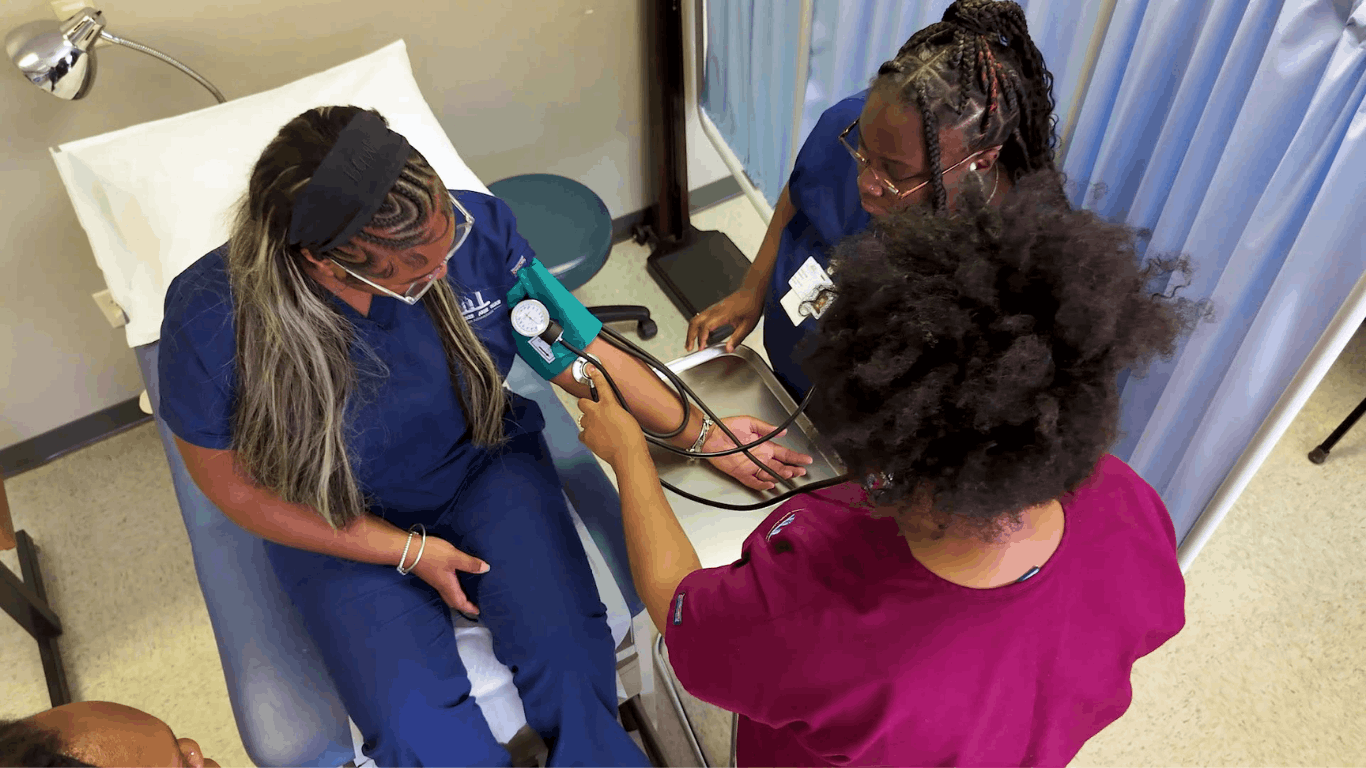
Career colleges focus on hands-on job training. You won’t take many general classes. Instead, you’ll learn the exact skills you need for your job. This helps you get ready for work faster than students who study many different subjects.
Career colleges teach skills that employers need right now. This means career college students often get jobs faster because they know exactly what companies are looking for.
Key Takeaways
When evaluating career college versus traditional university options, decisions should align with career clarity, timeline, and finances. Essential considerations include:
- Get hired faster: 74 out of 100 career college students land jobs in their field
- Save money: Career colleges cost less than a traditional university’s 4-year degree
- Learn by doing: Career colleges spend most of class time with hands-on training
The optimal choice depends on prioritizing quick specialized employment or comprehensive education with long-term flexibility.
Start with Your Career Goals
The type of school you choose depends on what you want to do for work. Think about your career goals. This will help you pick the right school.
Do You Know What Career you Want?
Career colleges are great if you already know what job you want. They teach one specific career. Students who want focused training often do better than students who study many different things.
Career colleges offer programs that train you for one job. These programs are shorter and more focused. Many career college students get jobs quickly in fields like healthcare, technology, and skilled trades.
Do You Want to Try Different Subjects First?
Universities are better if you’re not sure what you want to do yet. They let you take classes in many subjects. You can explore different topics while you work toward a degree.
Even if you pick a major like math or science, you’ll still take other classes too. Most majors only need you to take two classes in your main subject each term. The rest of your classes can be in other areas.
Universities teach you skills that work in many jobs. You’ll learn how to think clearly, solve problems, talk to others, and study information. Career college students often find jobs faster than traditional university students.
When you pick a school, think about what you need now and what you want in the future.
Compare How You’ll Learn
Where you go to school matters. Career colleges and universities teach in very different ways.
Hands-On Training vs Learning Ideas
Career colleges spend more class time on hands-on training. You’ll work in labs and practice real job skills. When you finish, you’ll have real world experience.
Universities focus more on ideas and concepts. You’ll spend time in lectures and reading books. Studies show that students think they learn more from lectures, but students actually learn better when they practice and do hands-on work.
Class Size and Time with Teachers
Career colleges have smaller class sizes on average. Your teachers have worked in the field before, and they can give you feedback and personalized help. Career colleges maintain smaller class sizes like this so that the instructors can spend time helping their students individually.
Universities often have big lecture halls with hundreds of students. It’s harder to talk to your teacher or ask questions. You might not get much one-on-one time with your professor.
Meeting Other Students and Making Connections
Who you know can really help your career. About half of all job opportunities come from people you know. Career colleges help you meet people who work in your field. Universities let you meet people from many different areas.
Time and Money: What You Need to Know
How much money you spend and how much time you need are both important. Your choice will affect your budget and when you can start working.
How Much Time Can You Invest?
Programs take different amounts of time. Career colleges have programs you can finish in a few months, others in less than two years. This means you can start working sooner.
Universities on the other hand need 4-5 years to finish a bachelor’s degree. This means you’ll start working later than career college students.
What Will Your Education Cost?
The cost of training is very different. A four-year degree at a public university can cost about $9,800 per year on average. That cost, along with books, supplies and a place to live can add up to hundreds of thousands of dollars easily.
Career colleges and trade schools cost significantly less, meaning students have less debt when they graduate.
You Can Get Help Paying for School
Both types of schools can help you find payment options. When you fill out the FAFSA form, you can get grants (free money), loans (money you pay back), and work-study programs (jobs while you study).
Universities usually have more scholarship and award options for good grades. Career colleges can help you get special funding through trade scholarships, which give money to students learning a specific trade.
Milwaukee Career College is ready to help explore new career options!
Which Path Leads to Your Future?
Your long-term success depends on picking the right school for what jobs need now and in the future. Both paths can lead to good careers, but they work for different timelines and goals.
Starting Work Quickly vs Having More Options Later
Career college students are great at getting jobs in their field. Out of 100 career college students, an average of 74 find work doing exactly what they’re trained to do. For university students, it’s only 53. That means career college students have a better success rate at landing their dream job.
Career colleges prepare you for jobs that are in high demand right now. When you finish your program, you have the exact skills that employers are looking for. The focused training helps you start your career faster and with more confidence. You spend less time searching for work and more time building your career and earning money.
Job Needs and Job Market Changes
More and more jobs need some training after high school. According to a study at Georgetown University, by 2031, about 72% of jobs (that’s 7 out of 10) will need some college or training after high school.
Each year through 2031, there will be about 18.5 million new job openings. About 12.5 million of these jobs will need college or career school training. Fast-growing fields like healthcare, office jobs, government work, and hotels usually need training after high school.
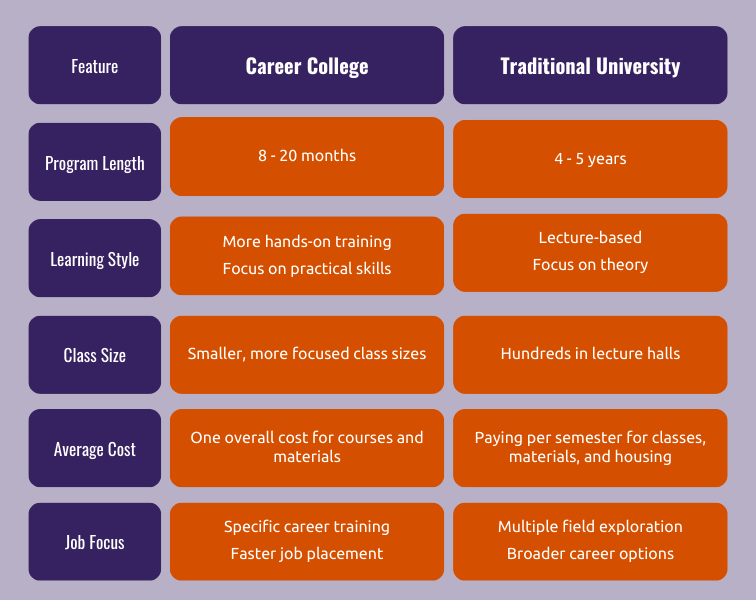
Quick Look: Career College vs Traditional University
A comparison of key factors between career colleges and traditional universities:
Universities are good for students who want to try different subjects before picking one path. These programs take more time and money. But they give you lots of knowledge that can help in many different careers.
Timing is important when you choose. Career college training gets you working faster. University programs give you more time to explore if you have a flexible schedule.
Success comes from picking the school that fits your goals. The right choice helps you either get into a specific job quickly or spend more time learning about different topics.
FAQs
What’s the main difference between career colleges and universities?
Career colleges are often shorter, more focused programs with hands-on training for specific careers. Whereas traditional universities provide 4-5 year programs with broader theoretical learning across multiple subjects.
How do the costs compare between career colleges and traditional universities?
Career colleges cost significantly less money, while a four-year degree could cost much more with books, housing, and other course expenses.
Which option is better for someone who knows exactly what career they want?
Career colleges are usually better if you know what job you want. They give you focused training and help you get a job faster.
How are class sizes different?
Career colleges have smaller class sizes on average. This means you get personal help. Universities often have bigger classes, especially in the first year. Some classes have hundreds of students.
Start Your Career College Journey Today!