
National Veterinary Technician Week 2026: What Stands Behind the Credential

National Veterinary Technician Week 2026 runs October 18 to 24. This year’s theme is “Credentialed Veterinary Technicians: Endless Compassion, Expert Care; Celebrating the Soul of Veterinary Medicine.”
The theme puts one word first: credentialed. Behind that title are years of study, two exams, and a daily mix of skill and care that most pet owners never fully see. This article looks at each part of the theme and what it says about the people who earn the title.
Endless Compassion: The Part of the Job Few People See
Most vet techs start with a love of animals. On the job, that love turns into hundreds of small acts of care each week.
A vet tech may spend ten quiet minutes helping a shaking dog feel safe before a blood draw. They watch over patients as they wake up from anesthesia. They notice when a cat that usually eats well has not touched its food. Calming a frightened patient is a learned skill, and MCC’s blog shares vet tech tips for calming skittish animals.
Compassion also extends to people. The U.S. Bureau of Labor Statistics (BLS) lists compassion as a key quality for vet techs, including being sensitive with owners of sick pets. Vet techs often sit with families during hard news.
That care has a cost. According to the BLS, vet techs may see abused animals and may help during euthanasia. Showing up with patience day after day, even after the hardest cases, is part of what this week honors.
Expert Care: The Skills Behind Every Visit
Compassion alone does not keep a patient safe under anesthesia. That takes training.
Credentialed vet techs handle much of the hands-on medical work in a veterinary practice. Under a veterinarian’s supervision, they:
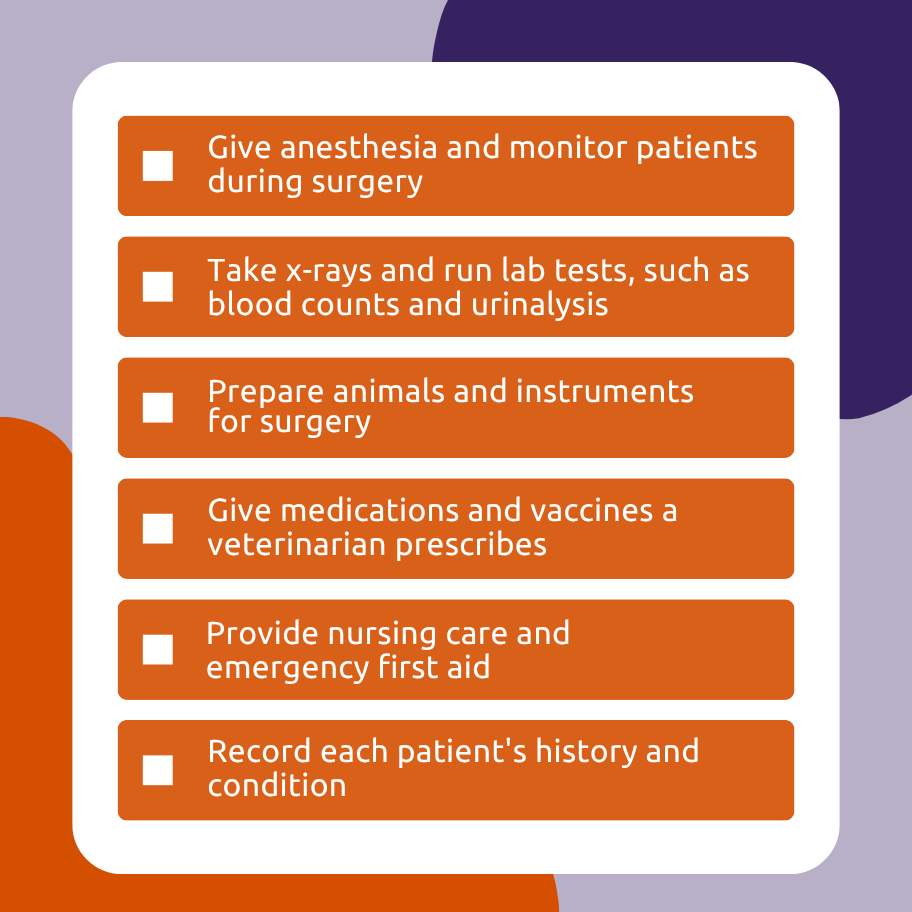
In many ways, vet techs are the nurses of veterinary medicine. Some states and countries even use the title “veterinary nurse,” and Wisconsin accepts that title as equal to “veterinary technician”. Unlike human nurses, though, vet techs care for many species, from cats and dogs to horses and exotic pets.
Some vet techs go further and focus on one area. The BLS lists dentistry, anesthesia, emergency and critical care, and zoo medicine as examples. MCC’s blog breaks down what a vet tech does on a typical day.
Credentialed: What It Takes to Earn the Title
“Credentialed” means a vet tech has met their state’s standards and passed a national exam. Depending on the state, vet techs become registered, licensed, or certified. In Wisconsin, the title is Certified Veterinary Technician, or CVT.
Every CVT in Wisconsin has completed the same core steps:

- Earn a degree from an accredited program. Wisconsin’s main path requires graduation from a school accredited by the AVMA or CVMA. At Milwaukee Career College, the AVMA-accredited Veterinary Technician program takes 73 weeks. That includes 61 weeks of classes and labs, plus a 12-week externship at a working veterinary practice.
- Pass two exams. Graduates take the Veterinary Technician National Exam (VTNE) and the Wisconsin Statutes and Rules Exam on state veterinary laws.
- Apply for certification. After passing both exams, graduates apply to the Wisconsin Veterinary Examining Board.
- Keep learning. Wisconsin requires CVTs to complete at least 15 hours of continuing education every two years.
Each credential reflects that work. When a pet owner sees “CVT” on a name badge, it means that person has proven their skills to the state.
The Heart of Veterinary Medicine: Why Vet Techs Matter More Than Ever
Vet techs are often the link between the exam room and the family at home. They explain test results, show owners how to give medicine, and answer questions after the veterinarian leaves the room.
The need for that work keeps growing. The BLS projects jobs for vet techs will grow 9% from 2025 to 2035, compared to 3% for all jobs. That adds up to about 13,400 openings each year. The BLS links this demand to more households with pets, rising spending on pet care, and an aging pet population that needs more complex treatment.
In short, more animals need care, and that care depends on credentialed vet techs.
Thank You, Veterinary Technicians
During National Veterinary Technician Week and all year long, Milwaukee Career College thanks every credentialed vet tech who brings both compassion and expert care to work each day. MCC also thanks its vet tech students and graduates. They are the next generation of professionals who will carry this work forward.
For readers who see themselves in this work, the path starts with training. Anyone interested in becoming a credentialed vet tech can call MCC at 414-488-0461 or request program information.
Frequently Asked Questions
Who started National Veterinary Technician Week?
The National Association of Veterinary Technicians in America (NAVTA) started it in 1993. It takes place every year during the third week of October.
Is a vet tech the same as a veterinarian?
No. Vet techs work under a veterinarian’s supervision, and only a veterinarian can diagnose, prescribe drugs, or perform surgery.
What is the difference between a vet tech and a vet assistant?
Vet techs earn a degree and pass a credentialing exam, while vet assistants do not need a license or certification. MCC explains more in its guide to vet assistants vs. vet techs.
Do vet techs work nights and weekends?
Many do. Emergency clinics and animal hospitals often need vet techs on evenings, weekends, and holidays.
Where else can a credentialed vet tech work?
Besides clinics and animal hospitals, vet techs work in research labs, zoos and wildlife parks, schools, and veterinary sales. Some work with large animals or in emergency and specialty practices.
Can a credentialed vet tech work in another state?
Often, yes. A VTNE score can transfer to another state, but each state sets its own rules, so vet techs should check with that state’s veterinary board first.
Is financial aid available for vet tech school?
Yes, for students who qualify. Milwaukee Career College offers financial aid and scholarships to help cover the cost of training.